
By Gregg Andrews
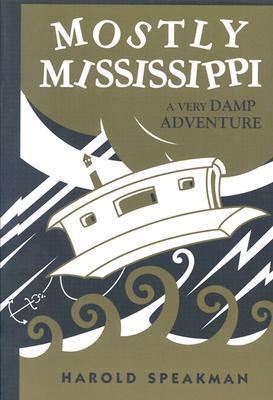
When I was doing the research that led to my book, Shantyboats and Roustabouts, I read many travel narratives of the Mississippi River. One of them was Mostly Mississippi (1927) by author and artist Harold Speakman. His wife, Frances “Russell” Lindsay Speakman, was an illustrator and well-known muralist. Shortly after they married on July 5, 1925, they set out for New Orleans on a 2400-mile adventure in a canoe from Itasca, Minnesota. When they reached St. Paul, they bought an old shantyboat, named her Isador, and fixed her up with the help of someone in St. Paul’s shantyboat community. The Speakmans added an outboard motor to Isador and took off on a honeymoon adventure down the Mississippi to the Crescent City.
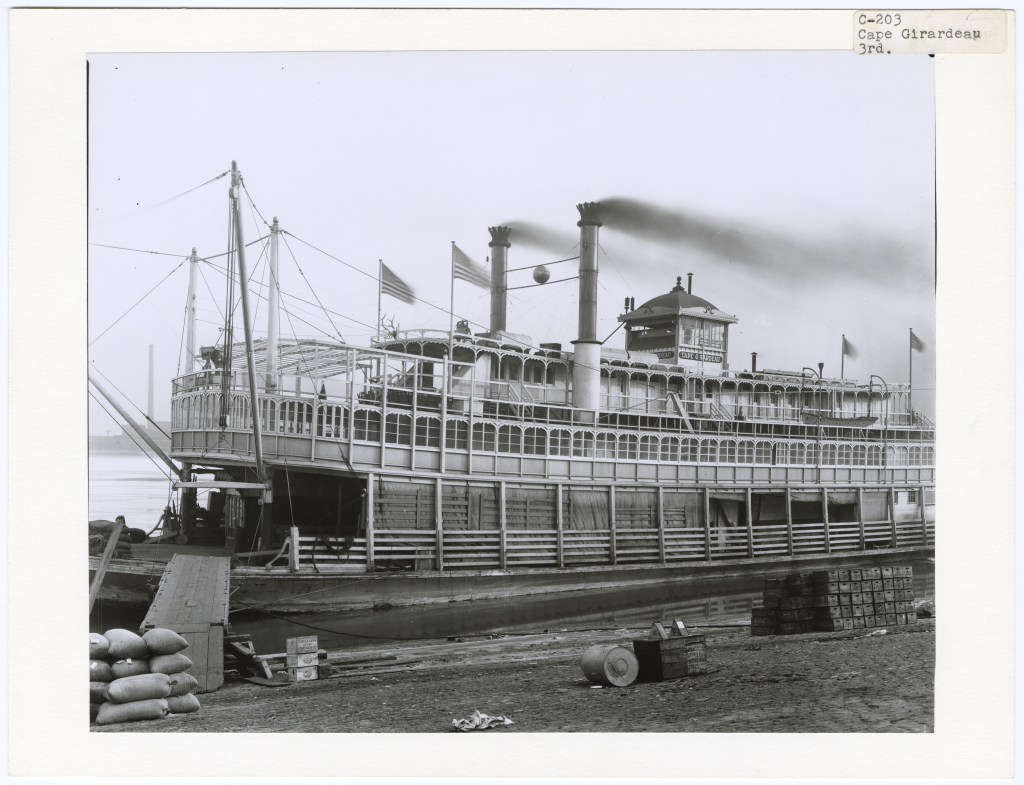
As I read the narrative, I became excited when the Speakmans neared the Hannibal riverfront. As many of you know, I grew up in the Hannibal area. I was eager to read their observations of my hometown one hundred years ago. In a cold, steady rain in November 1925, the Speakmans struggled to find a place to tie up their houseboat. The rain and a falling river “left a thirty-foot smear of maltese mud along the cobble-stoned jetty” (p. 173). Just as they managed to tie up Isador near a freight house, they were whipped around by six-foot waves of the Cape Girardeau, which was on its way upriver. The author described the sternwheeler as a “bellowing monster of the Mississippi, the first three-deck packet boat we had seen, snorting and thundering, and blowing hoarsely for the bridge to open for it” (p. 173).
Like most travel writers on the river, the couple stopped in Hannibal because of Mark Twain. After their first night there, they awoke to find half an inch of snow on the roof of their houseboat. Describing Hannibal as a “rather ugly little river city,” they visited the landmarks in town and interviewed Laura Hawkins Frazer (Becky Thatcher) at the home of her son, Ed Frazer, near Withers Mill. As Harold interviewed Frazer, who was in her late eighties, Russell did an artist’s sketch of her.
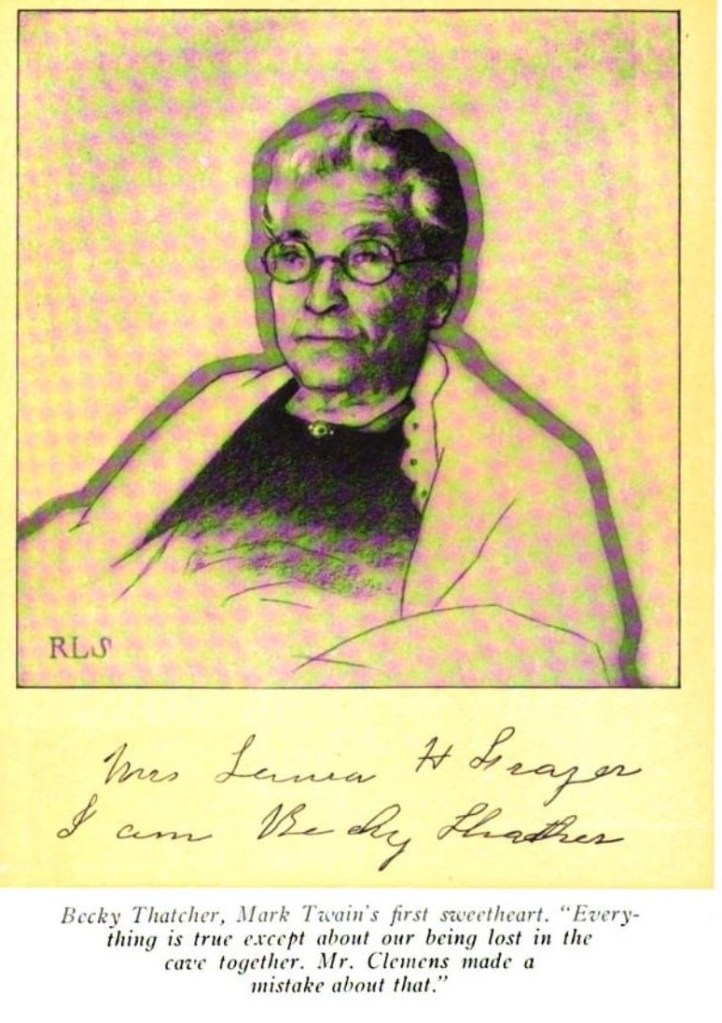
By the time the Speakmans returned to the riverfront after the interview with Frazer, the temperature had dropped to twenty degrees. After staring at Isador as the blustery wind and waves buffeted her about, they decided to check into the Mark Twain Hotel for the night. It was still cold the next morning, but the wind had died down a little. The couple was anxious to get further south before the river froze and stranded them. With icicles hanging from the roof of Isador, they untied her lines and shoved away from the dock only to discover that their outboard motor wouldn’t start. The wind and current quickly swept them downstream. Near the Atlas Portland Cement plant, the houseboat was on a collision course with the plant’s private buoy. Harold ran to the front of the boat and kicked the buoy to avoid bumping into it. Finally, the Speakmans succeeded in tying up Isador on an island across from the cement plant, near the Illinois side.
While Russell remained on the island with the houseboat, Harold removed the motor, put it into their attached skiff, the Abject Stupidity, and tried to row four miles back to Hannibal to find someone to fix the motor. The wind and the current wouldn’t let him. The best he could do was to keep from being swept further downriver. He managed to land the skiff directly across the river from the island. By now, I was even more excited as I read the narrative. Speakman tied up his skiff on the west bank and ran into a bearded man with a leathery face in shabby overalls who was tinkering with an old rowboat on the bank. Speakman asked him the best way to get to Hannibal with the motor. “Now that’s a right hard question,” the stranger replied. “There’s no car here and no train stopping except the Polak [cement plant work train] at three this afternoon. But there’s a store down the road a piece where they have a truck. They might take a man to town if he had to go.”
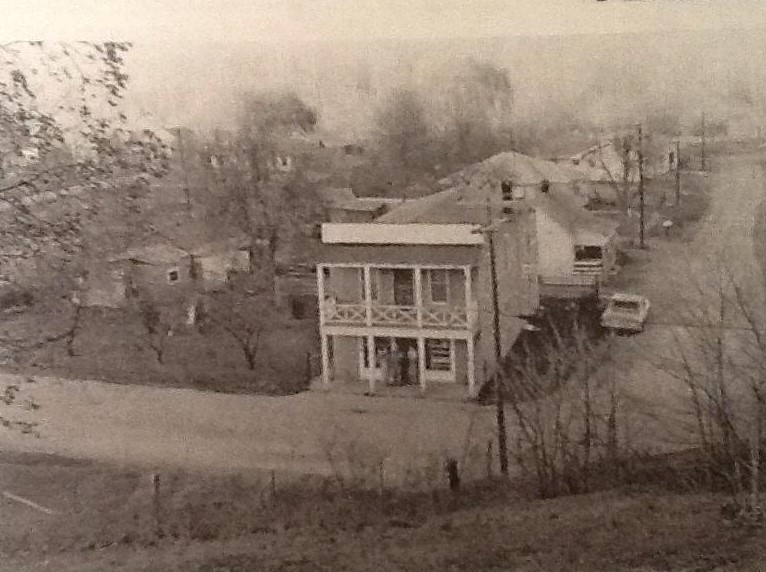
Well, I knew the store that the stranger mentioned. It was in the village I grew up in twenty-five years later among descendants of southern and eastern European immigrants. The stranger said the store was about a quarter mile away, but Speakman, after lugging the heavy motor a considerable distance, was overcome by exhaustion. After falling with the motor, he propped it against a fence and walked the rest of the way to the store without it. “In the store there is a comely Russian woman [Anna Kitsock Mikulcik] who is the wife of a Czecho-Slav [Steve Mikulcik], who in turn is away hunting,” Speakman later wrote. “The woman, out of the goodness of her Muscovite heart, offers to telephone to town for a taxicab. The address she gives the taxi-man is, Monkey-Run-by-the-Cement-Works. In spite of that peculiar address, the taxicab gets there.”
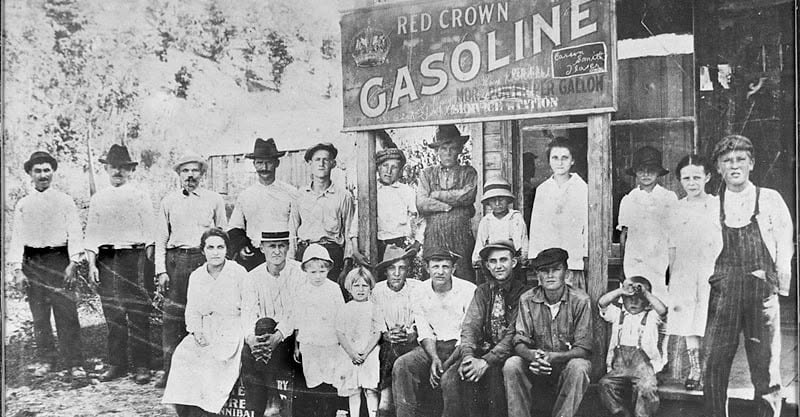
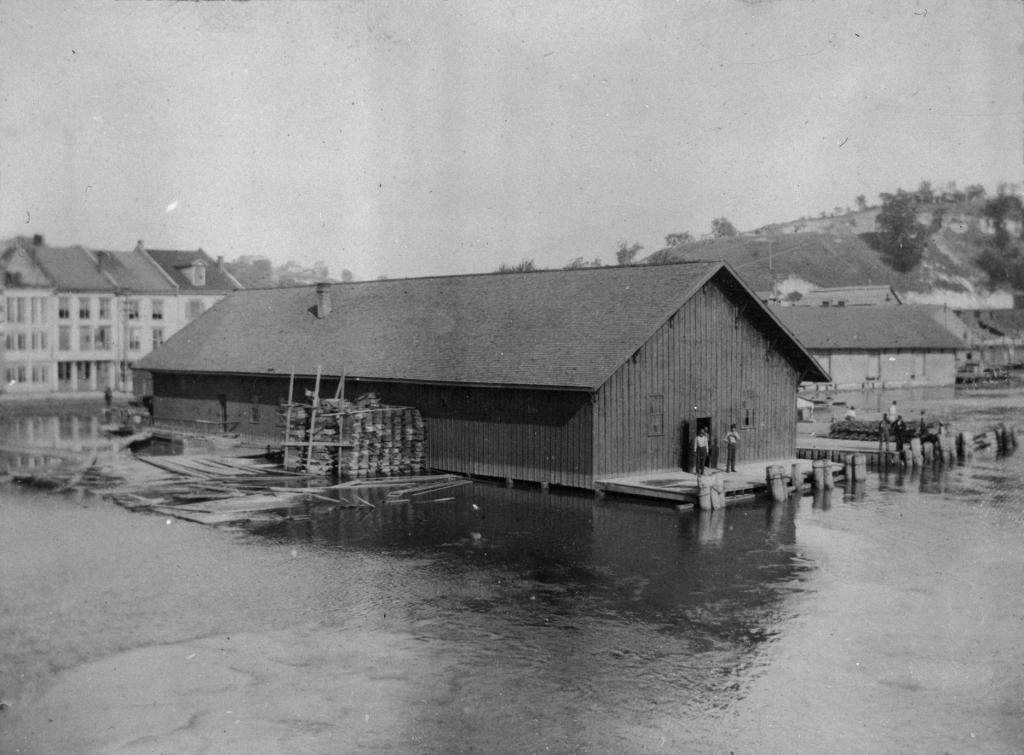
The taxi driver took Speakman and the motor to a Hannibal boathouse and repair shop on the riverfront, where the repairman fixed a short in the stop-button. On the way back to the skiff, Speakman noted a sign pointing to the Mark Twain Cave. He paid the taxi driver to wait while he toured the cave with E.T. Cameron as his guide. Afterward, the driver dropped Speakman off about a hundred yards from the Abject Stupidity. Speakman rowed across the river to his wife and the houseboat with their repaired motor. They soon resumed their journey down the river. Harold Speakman wrote that he was thankful not to be stranded for the winter in “Monkey-Run-by-the-Cement-Works.”
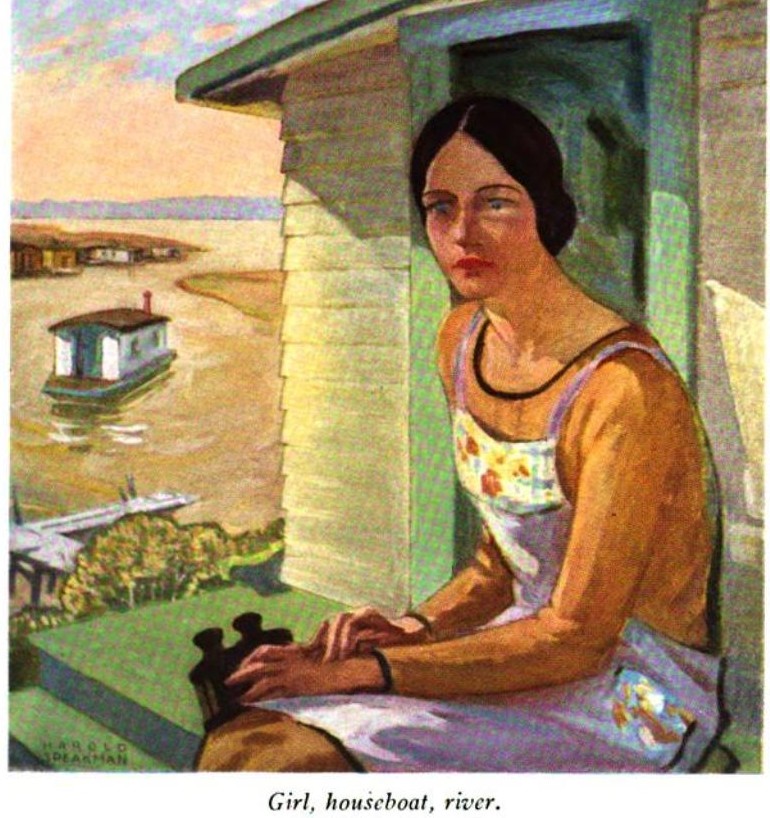
Note: The featured image in my post is artwork by Harold Speakman that appeared in Mostly Mississippi.


Leave a Reply